
Welcome to an explanation of Advent, Christmas, and Epiphany. Advent runs from November 29th to December 24th. Christmas is from December 25th through to January 5th. And this year, Epiphany runs from January 6th through to February 2nd this year.
This year, we will have a special evening service of carols and readings to begin Advent at 4pm on Sunday, November 29th. Whether you are a member of St. Michael's, a friend from the community, or simply seeking a meaningful way to begin the Advent season, all are welcome. Come and prepare your heart for Advent through the beauty of word and song.
What is Advent?
The word Advent comes from the Latin word “adventus,” meaning coming. For Episcopalians, it is the time in our Liturgical Calendar when we prepare for the coming of Christmas and all the joys that come with it. During this time, we are in a state of anticipation and commemoration of the good news that came into the world with Jesus and the knowledge that he will come again. We prepare for this with a series of four Sundays with special readings and songs.
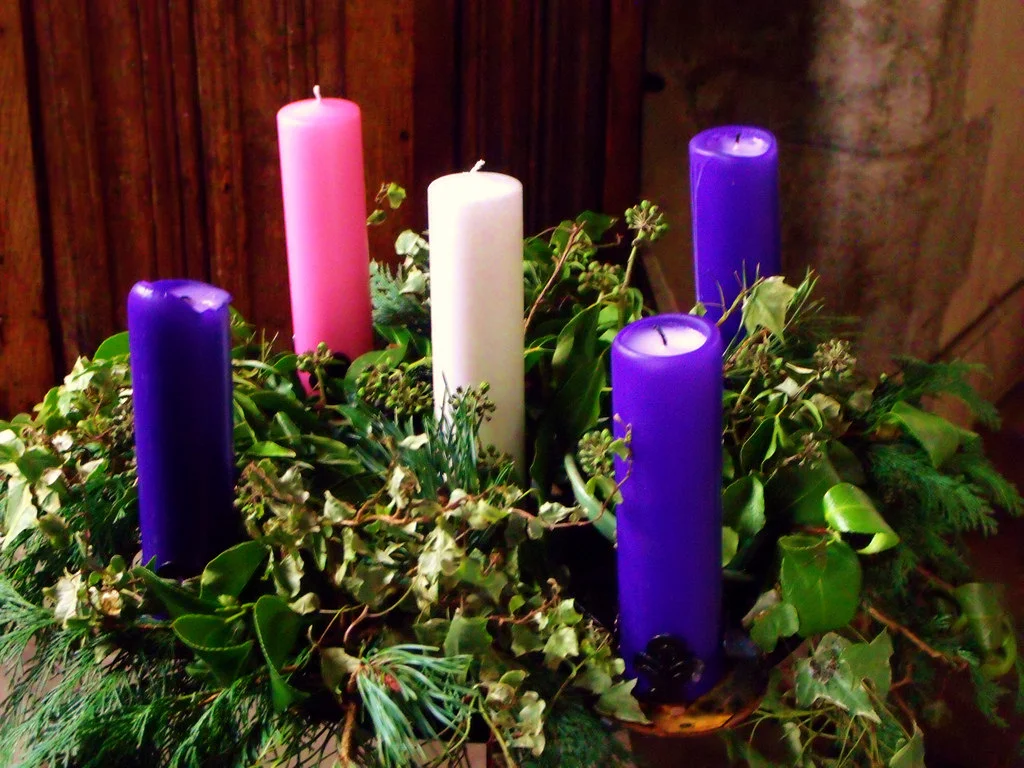
One of our traditions is the Advent Wreath. It is made up by four candles, three purple and one pink (sometimes blue). They are arranges in a circle, often decorated with greenery. it is a crown for the holiday. Sometimes, there is a fifth, white candle - known as the Christ Candle - which would be lit on Christmas Eve. On the Sunday of each week of Advent, we light one of these candles.
The first candle to be lit represents hope. It reminds us that we have a faithful God who will fulfill His promise to send a savior. The second candle to be lit represents peace or preparation. We are reminded to make room in our hearts, in our lives and the lives of others to allow the Holy Spirit to bring us His peace and awareness of our savior.
The third candle represents joy. We have a cause to celebrate! The coming of a savior means that we will be reconciled with our creator. That although we live in a broken world that still suffers from sin, we are not alone! We have a savior, a protector, who frees our hearts to happiness.
The fourth candle (pink or blue) represents love. Our creator sent a savior because he didn’t want to be separated from us. He loved us! “For God so loved the world that he gave his one and only Son, that whoever believes in him shall not perish, but have eternal life. For God did not send his Son into the world to condemn the world, but to save the world through Him.” (John 3:16-17)
Some may also place a plain white candle, known as the Christ Candle, in the center of the Advent wreath to be lit on Christmas Eve. Jesus was the pure sacrifice sent to wash away our sins. God’s literal life on earth is the hope of our salvation and we honor this event on Christmas Day.
Another tradition of Advent it to green your house and to put up your nativity scene. But many Episcopalians will save putting up their Christmas tree or putting baby Jesus into the nativity until Christmas Eve. Some will even hold back the three Wise Men until Epiphany.
When do you get to Christmas?
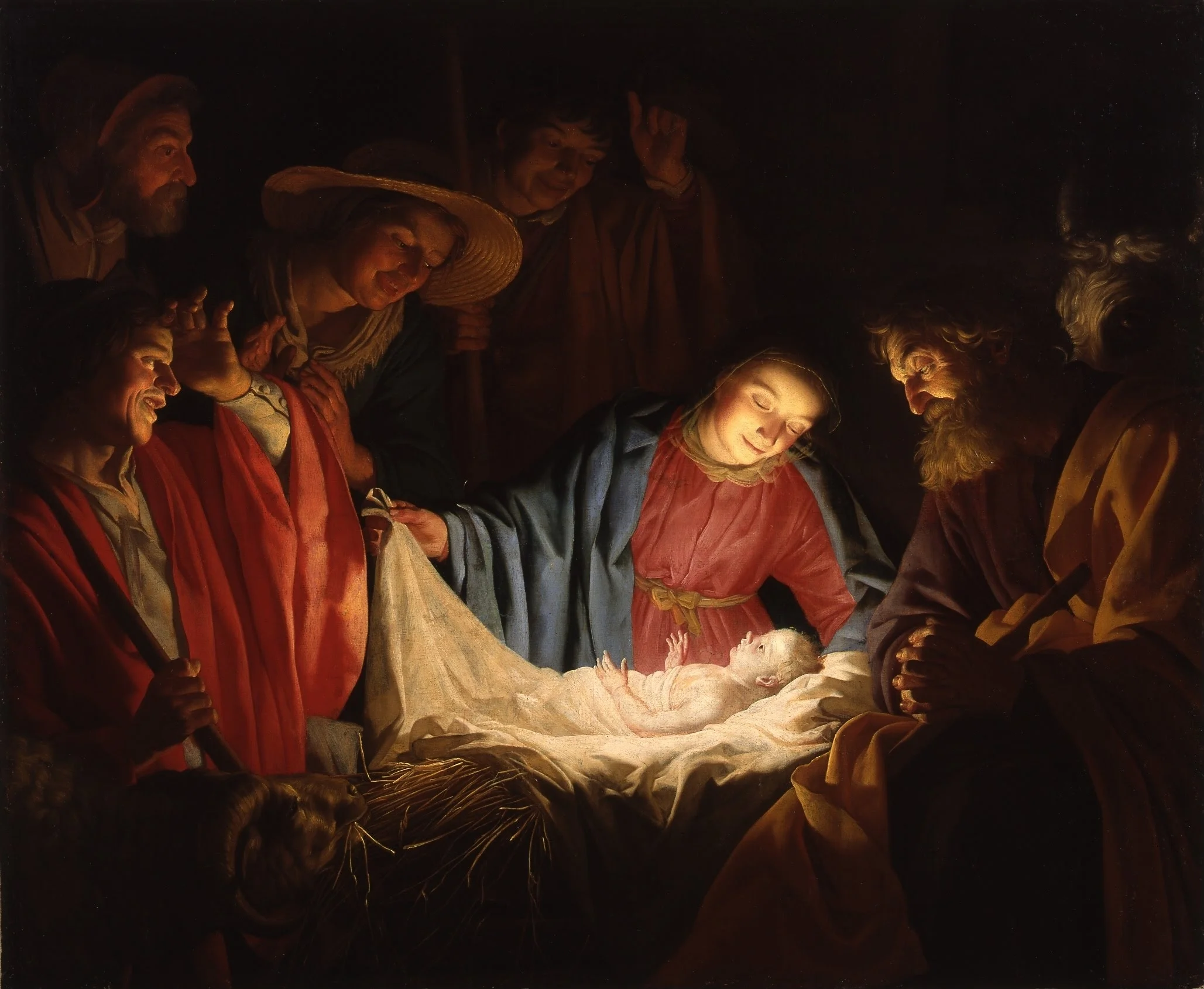
For Episcopalians, Christmas arrives on Christmas Eve. For us, this is a day when we remember that God chose to dwell with us. He made the choice that to fully enter into our lives by becoming one of us through his son, Jesus. God is not an aloof figure who orders and commands us. He is a loving father who resides in us and loves us so much that he came to redeem us to himself in the aspect of his son.
Traditionally, this night will be filled with music and celebration. Our 5pm Christmas Eve service will bring us together in worship, prayer, and song as we hear once again the story of Christ's birth and rejoice in God's gift of love to the world. Through familiar carols, scripture, and the celebration of the Holy Eucharist, we gather as a community to welcome the Christ Child and proclaim the good news of Christmas. Come as you are, bring those you love, and join us as we celebrate the birth of Christ and the promise of God's love for all people.
At home, Christmas Eve is the time when many Episcopalians will put up their Christmas Tree and the baby Jesus will join Mary and Joseph in his manger.
The Twelve Days of Christmas
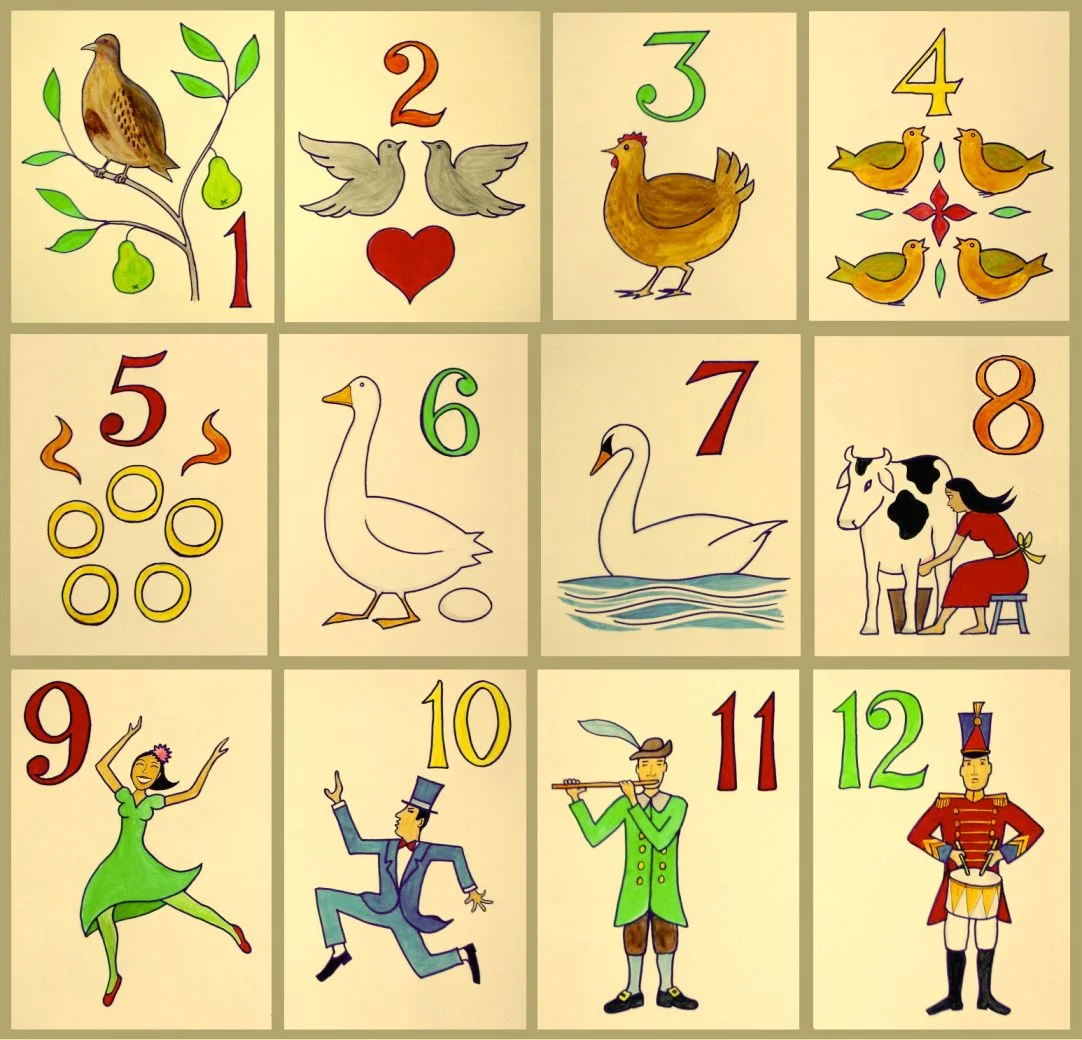
You’ve all heard the song, but it isn’t just about gift giving (although, the birth of Jesus was the greatest gift ever given to humanity). For Episcopalians, the twelve days of Christmas from December 25th through January 5th are the season of Christmas. This is when we sing Christmas Carols and celebrate the great joy of God living among us as a human.
Within the twelve days of Christmas, we also have some other days of religious note. On December 26th, we celebrate the Feast of St. Stephen. St. Stephen is remembered not only as the first martyr of the church, but also the first deacon ordained for the care of the poor. December 27th is the Feast of St John the Evangelist. The Gospel of John refers to him as a "disciple whom Jesus loved", who "bore witness to and wrote" the Gospel's message. December 28th has a sadder note. It is the Feast of the Holy Innocents, and commemorates Herod’s order to kill the children of Bethlehem. It is a day within our tradition for parents to spend with their children and to bless them. You might also want to consider making a donation to St Michael’s diaper ministry, that serves infants and toddlers through the distribution of diapers. Minor feast days during the season of Christmas include commemoration of Thomas Becket (December 29th), Francis Joseph-Gaudet (December 30th), Samuel Ajayi Crowther (December 31st), Vedanayagam Samuel Azariah (January 2nd), William Passavant (January 3rd), and Elizabeth Seton (January 4th). On New Years Days, we celebrate the feast of the Holy Name of Our Lord Jesus Christ. Symbolically, this is the day of the circumcision of Jesus and, therefore, it is the first spilling of Christ’s blood for ours sake.
While not an official feast day, January 5th is sometimes called “Star Day.” We commemorate the star that drew the Wise Men to honor the birth of the Messiah.
Epiphany
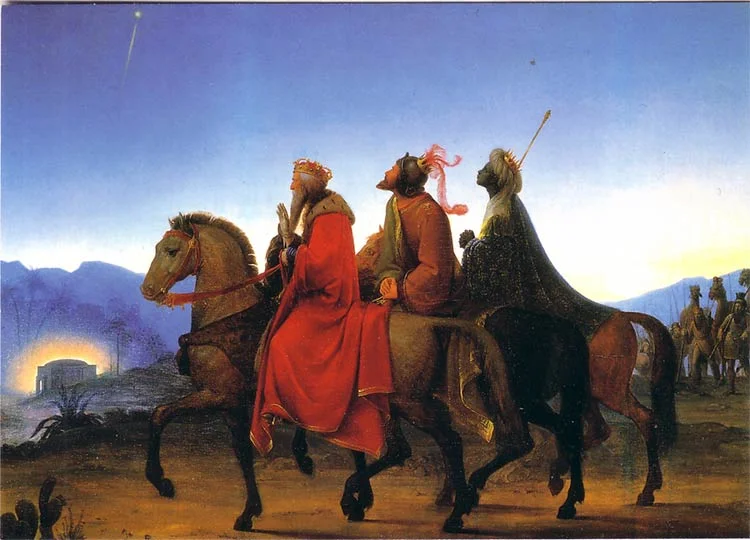
Epiphany and the arrival of the three Wise Men coincide for Episcopalians on January 6th.
The word Epiphany means revelation. For Episcopalians it means several things. First, it is the official end of the Christmas season, but it is also the time for us to come to the understanding of the full divinity of Christ. Epiphany is often called the Feast of the Magi (the Three Kings). The story of the three Wise Men is so important because it is the beginning of Christ’s inclusion of gentiles into the children of God. So, on this day, some Episcopalians will add the three Wise Men in their nativity. The season of Epiphany varies from four to nine weeks, because of the arrival of Lent and Easter are linked to the lunar calendar. There isn’t any official deadline of when to take down your nativity, so feel free to commemorate the Wise Men as long as you like.